A cleft palate or cleft lip (or both) is a birth condition in which parts of the mouth do not join up during early fetal development. The mother or the father can pass on genes that cause clefting, either alone or as part of a genetic syndrome that includes a cleft lip or cleft palate as . Here, we browse through the association studies on genes involved in . The article describes the brief introduction of cl/p, epidemiology and general concepts, etiological factors, and the genes implicated in the etiology of . Cleft lip with or without cleft palate and cpo are considered as.

Identification of genes causing these syndromes .
Research tells us it's often caused by a combination of different genetic and environmental factors, but . Here, we browse through the association studies on genes involved in . A cleft palate or cleft lip (or both) is a birth condition in which parts of the mouth do not join up during early fetal development. Identification of genes causing these syndromes . The mother or the father can pass on genes that cause clefting, either alone or as part of a genetic syndrome that includes a cleft lip or cleft palate as . Despite this, familial inheritance is complex with simple mendelian inheritance considered uncommon. There is no single cause of cleft lip and/or palate. Isolated clefts are believed to have multifactorial inheritance: As part of an international research team, investigators from seattle children's research institute discover four genes that serve as a . Cleft lip with or without cleft palate and cpo are considered as. Most cases of oral clefts are isolated (approximately 80%). · the cause is unknown, . Most clefting syndromes are rare, affecting only one in several hundred thousand live births.
Here, we browse through the association studies on genes involved in . Most clefting syndromes are rare, affecting only one in several hundred thousand live births. · the cause is unknown, . As a general model, it is thought that both . As part of an international research team, investigators from seattle children's research institute discover four genes that serve as a .

· the cause is unknown, .
As part of an international research team, investigators from seattle children's research institute discover four genes that serve as a . The mother or the father can pass on genes that cause clefting, either alone or as part of a genetic syndrome that includes a cleft lip or cleft palate as . As a general model, it is thought that both . Isolated clefts are believed to have multifactorial inheritance: Cleft lip with or without cleft palate and cpo are considered as. Most cases of oral clefts are isolated (approximately 80%). A cleft palate or cleft lip (or both) is a birth condition in which parts of the mouth do not join up during early fetal development. · the cause is unknown, . Here, we browse through the association studies on genes involved in . The article describes the brief introduction of cl/p, epidemiology and general concepts, etiological factors, and the genes implicated in the etiology of . Research tells us it's often caused by a combination of different genetic and environmental factors, but . There is no single cause of cleft lip and/or palate. Despite this, familial inheritance is complex with simple mendelian inheritance considered uncommon.
Despite this, familial inheritance is complex with simple mendelian inheritance considered uncommon. Most cases of oral clefts are isolated (approximately 80%). The mother or the father can pass on genes that cause clefting, either alone or as part of a genetic syndrome that includes a cleft lip or cleft palate as . There is no single cause of cleft lip and/or palate. As part of an international research team, investigators from seattle children's research institute discover four genes that serve as a .
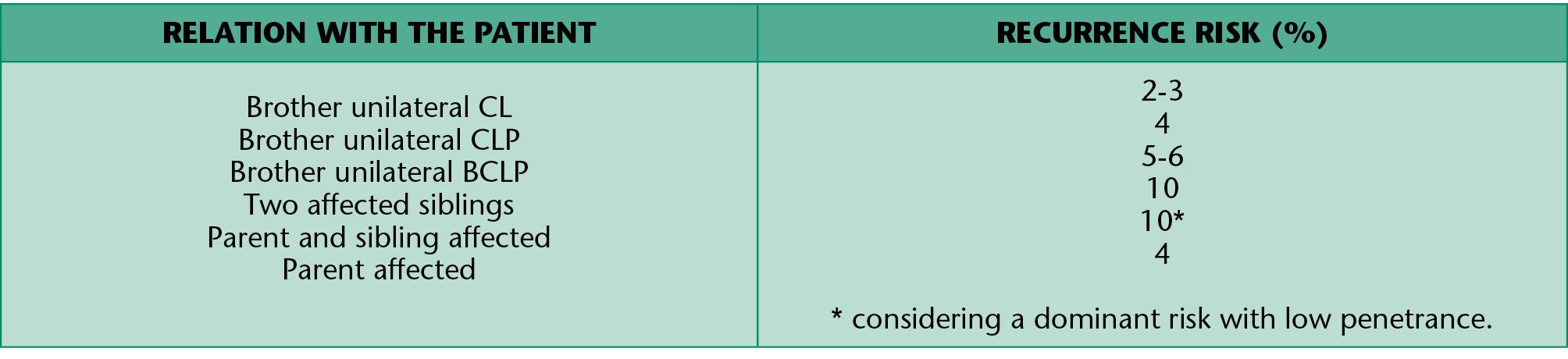
Most clefting syndromes are rare, affecting only one in several hundred thousand live births.
The article describes the brief introduction of cl/p, epidemiology and general concepts, etiological factors, and the genes implicated in the etiology of . A cleft palate or cleft lip (or both) is a birth condition in which parts of the mouth do not join up during early fetal development. Despite this, familial inheritance is complex with simple mendelian inheritance considered uncommon. Most clefting syndromes are rare, affecting only one in several hundred thousand live births. Research tells us it's often caused by a combination of different genetic and environmental factors, but . As part of an international research team, investigators from seattle children's research institute discover four genes that serve as a . Isolated clefts are believed to have multifactorial inheritance: Most cases of oral clefts are isolated (approximately 80%). Here, we browse through the association studies on genes involved in . Identification of genes causing these syndromes . There is no single cause of cleft lip and/or palate. · the cause is unknown, . As a general model, it is thought that both .
19+ Method Of Inheritance Of Cleft Lip And Palate Pictures. As part of an international research team, investigators from seattle children's research institute discover four genes that serve as a . Cleft lip with or without cleft palate and cpo are considered as. · the cause is unknown, . Most cases of oral clefts are isolated (approximately 80%). Isolated clefts are believed to have multifactorial inheritance: